


 Copy Link
 E-mail
 LinkedIn
 Facebook
 Telegram
 WhatsApp


Latest Updates


Inside The Mind of the Shopper: The Science of Retailing
DIAMOND
RATING
RATING


Herb Sorensen, Prentice Hall, 2009
Senteo’s Review 
This book provides a behavioral psychology perspective on shopping and lessons for success in retail. The author has spent 40 years working with Fortune 500 retailers and consumer packaged goods companies developing his methodology, studying shopper behavior, motivations and perceptions.
Herb Sorensen developed a patented shopper-tracking device called PathTracker to observe shopper behavior and provide a more quantitative, scientific approach. The book begins by explaining that 80% of shopper time is wasted, citing “three moments of truth” or opportunities to sell something (reach, stopping/holding, and closing). In each, he explains the sensory and eye-tracking methods used to track and influence shoppers, as well as “the three currencies of shopping” – money, time, and angst.
The author cites five store designs and how they can be used to affect shopper behavior, and utilizes some unique analyses such as “vital quadrant” which plots product shopping power and closing power and ranks products. He goes on to explain metrics for shopping behavior, with a complete flow and adjacency analysis for stores.
The author backs his behavioral data with many tables, graphs, illustrations, and data analysis. In the field of behavioral psychology, the use of PathTracker sets this author apart from others (see Paco Underhill’s more anecdotal work, “Why We Buy”, reviewed by Senteo). There are good examples of in-store navigation patterns, explaining where shoppers go and what they do, for example, why shoppers gravitate to open spaces and how products hardly ever dictate shopper traffic. The book is well-organized, with each chapter providing examples of the authors methodology for measuring, analyzing and applications. The second section provides thought-provoking interviews with experts in the field from Unilever, The Wharton School, and others.
The book could use more examples of how to apply the findings in a more structured, methodological way.
What do you really do when you shop? The answers are fascinating and, for retailers, they’re cash in the bank. In Inside the Mind of the Shopper: The Science of Retailing, world-renowned retail consultant Dr. Herb Sorensen, Ph.D. uncovers the truth about the retail shopper and rips away the myths and mistakes that lead retailers to miss their greatest opportunities. Every year, says Sorensen, shoppers will spend a quadrillion seconds in supermarkets and they’ll waste 80% of that time. Sorensen analyzes consumer behavior–how shoppers make buying decisions as they move through supermarkets and other retail stores–and presents powerful, tested strategies for designing more effective stores, improving merchandising, and driving double-digit sales increases. He identifies simple interventions that can have dramatic sales effects, and shows why many common strategies simply don’t work. You’ll learn how to appeal to the “quick trip” shopper; make the most of all three “moments of truth”; understand consumers’ powerful in-store migration patterns; improve collaboration between manufacturers and retailers; learn the lessons of Stew Leonard’s and other innovators; and much more. Then, in Part II, Sorensen presents revealing interviews with several leading in-store retail experts, including crucial insights on using technology and retailing to multicultural communities.
With up to 80% of final purchasing decisions being made in-store, this is a good read for any marketer or retailer seeking to understand buyers’ behavior. It is an ideal fit for retailers, senior management, marketers, and consumer goods producers. If you want to delve deeper into buyers’ psychology on the basis, see The Buying Brain(Senteo review).

Senteo Subject Category

This book is primarily research-based with some methodology included.
The best book reviews in your inbox!
Subscribe now and receive a special gift with your subscription.
How important do you think understanding shopper behavior is for the success of a retail business?
Do you have account and want to vote as registered user? Please login
See content on this topic
Most companies are making the same AI mistake: trying to replace people instead of empowering them. Discover why human-first AI strategies create stronger customer relationships and greater long-term value.
Michael Ruckman talks about Customer Experiences & Customer Journeys, The three faces of Digital for Retailers and the state of leadership in the retail market today.

What is the difference between retention and loyalty, and between customer-centric and relationship-centric business models? How exactly can one monetize customer experience? Michael Ruckman answers these questions and more…


Related Book Reviews & Education


One of a series of books by Colin Shaw concerning the customer experience. Being the first of this series, this book provides a theoretical overview of the customer experience with many examples from the author’s consulting practice.

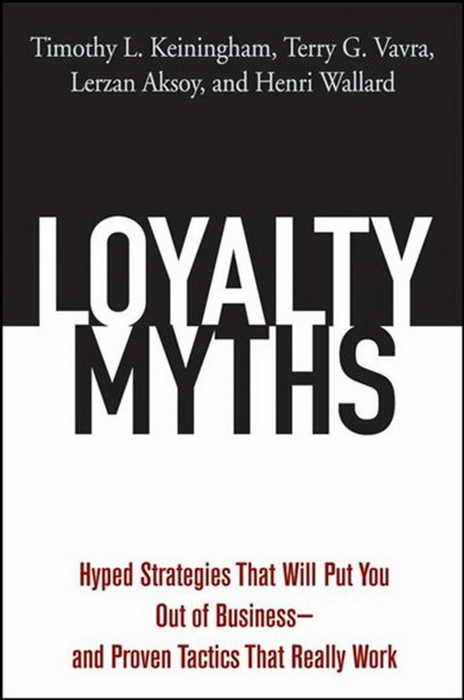
Loyalty Myths begins with Pareto’s principle that 80 percent of a company’s business comes from 20 percent of its customers. At the same time, up to 60 percent of a business’s customers could actually be generating negative profits.
Frontline Trainings
Front Line Sales Training & Development
Sales training for front line along with basic development and coaching principles for line management.
Master Class
Workshop
Experiential Branding & Communications – Improving Brand Integration Through Emotional Engagement
Understanding branding and communications from the standpoint of emotional engagement and building relevant and meaningful dialogue with customers.
Master Class
Workshop
Designing Experiential Customer Environments (Physical & Digital)
This course covers a complete view of customer touch points (both physical and virtual) and a unique model for standardizing and managing customer contact models across channels including approaches for customer feedback, quality management, and migration.
Management Trainings
Experiential Innovation & Relationship-Centric Business Design
Understand how the innovation process changes moving from functionality and channel design to a process focused on creating value for customers.
New
Online Course
Understanding Brand & Communications
Experiential Branding & Communications – Improving Brand Integration Through Emotional Engagement.
$195 One-Time Charge
Online Course
Understanding Customer Touch Points
This course covers a complete view of customer touch points (both physical and virtual) and a unique model for standardizing and managing customer contact models across channels.
$195 One-Time Charge
Master Class
Workshop
Using Customer-Oriented Analytics & Behavioral Scenarios to Improve Business Performance
Understand the value of a customer-oriented analytics package and how behavioral scenarios can be used to improve profitability through influencing behavior and usage.
Master Class
Workshop
Understanding Game Dynamics & Applying Gamification to Drive Customer / Employee Engagement & Loyalty
To understand the principles of game dynamics and learn how to effectively use the elements of gamification in business: to involve customers, employees and contractors in the process.
Master Class
Workshop
Experiential Branding & Communications – Improving Brand Integration Through Emotional Engagement
Understanding branding and communications from the standpoint of emotional engagement and building relevant and meaningful dialogue with customers.
Master Class
Workshop
Designing Experiential Customer Environments (Physical & Digital)
This course covers a complete view of customer touch points (both physical and virtual) and a unique model for standardizing and managing customer contact models across channels including approaches for customer feedback, quality management, and migration.
New
Online Course
Understanding Brand & Communications
Experiential Branding & Communications – Improving Brand Integration Through Emotional Engagement.
$195 One-Time Charge
Online Course
Understanding Customer Touch Points
This course covers a complete view of customer touch points (both physical and virtual) and a unique model for standardizing and managing customer contact models across channels.
$195 One-Time Charge




 Go Back
Leave a Reply
You must be logged in to post a comment.