


 Copy Link
 E-mail
 LinkedIn
 Facebook
 Telegram
 WhatsApp


Latest Updates


The BIG Mistake in AI Strategy to Avoid in 2026
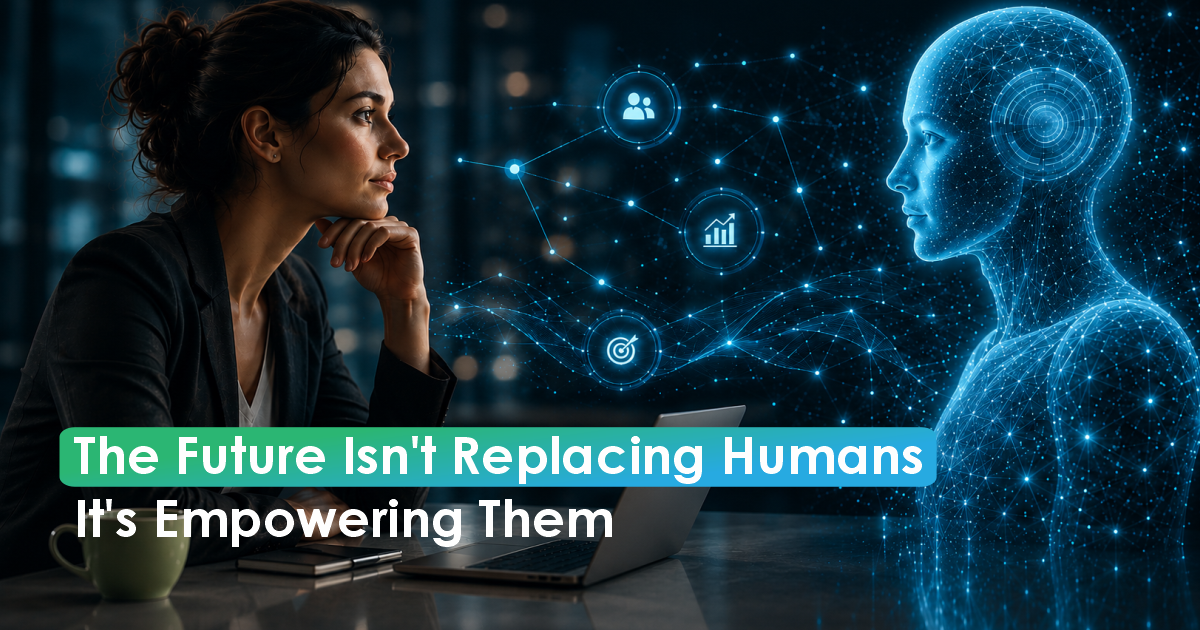

A few days ago, I was stuck in another “bot-loop” on the Amazon website. I made a purchase that arrived with a mangled box and a damaged product inside. After multiple attempts with their chatbot to resolve the situation, I gave up. The bot could not get past the logic of their menu structure to understand my situation, and, ultimately, I had to wait for a human to call me back to resolve the issue.
For me, and I assume for most people, this happens 80-90% of the time with AI agents designed to replace a human in a specific customer interaction. It seems this strategy of “replace the human with a bot” may be relevant in many “back office” situations with rather logical requirements, but in the realm of customer contacts, experiences, and relationships, it is a BIG mistake.
In my last article for Qorus, “Are businesses ready for the benefits and opportunities of AI?”, I wrote mainly about the current challenges that AI creates for businesses from the standpoint of organizational models:
- Organizational structures – how teams are organized for reporting and flow of communication.
- Management models – how decisions are taken and how resources are allocated.
- Performance measures – how things are analyzed to monitor progress and determine success or failure.
For this article, I will focus on the BIG mistake that most businesses are making with how they integrate AI in their day-to-day operations – especially in interactions with customers.
For the foreseeable future, the majority of AI implementations will bring some effect for humans as end-users and/or for humans as the managers and shareholders of organizations. So, until such time that AI determines us humans as useless, some general effect for humans must be considered in any AI implementation.
Unfortunately, what I see today in most companies is an almost blanket strategy of “replace the human with the bot,” which is simply dysfunctional in almost all situations. While a large part of this dysfunctional outcome is probably the result of the strategic motivation behind the AI implementation, the more plausible cause is a lack of understanding of the evolution of the human brain and the science of human decisioning.
Strategic Thinking for Bigger Economic Benefit
Similar to the mistakes made during the majority of digital transformations over the past 20-25 years, most businesses today are focused on the potential cost-cutting or efficiency benefits of AI implementations, which almost always have a limited range of potential economic benefit.
When companies begin to focus on creating value by enhancing the quality of human interactions, experiences, and relationships, the range of possible economic effect is much greater. In some cases, exponentially more economic value can be created with a “value-creation” mentality driving AI strategy compared to a “cost-cutting” focus.
Strategically, there is no inherent limit to the creation of new sources of monetizable value in customer relationships; however, there is always a point where processes, production, operations, logistics, cost of materials, etc., cannot be made faster or cheaper without significant degradation of quality.
Simply stated, there is significantly more range of potential economic benefit in using AI to enhance the quality of customer contacts, customer experiences, and customer relationships than there is in the cost-cutting space.
Companies that focus the majority of their effort on AI implementations that improve the quality of customer contacts, experiences, and relationships will see more economic benefit from their efforts in a much faster timeframe than the approach of “replace the human with the bot.”
The Human Seems to be Important for Quality of Interactions
On another level, to improve the quality of customer contacts, experiences, and relationships, removing the human as the main contact interface with customers is almost always a mistake – at least until AI develops past the current struggle of understanding human decisioning.
Depending on the theorist considered, one could say that the parts of the human brain that guide most human decisions have not changed dramatically for the past 50,000-100,000 years, but the science of human decisioning has developed significantly and quite rapidly over the past 100-120 years.
The areas of study related to how humans make decisions include game theory, behavioral economics, psychology, neuroscience, and even cognitive science. They range from the strategic to the mathematical and even to the qualitative and irrational aspects of how humans make decisions.
While our brains developed in a distinct evolutionary pattern, AI has developed its logic and understanding from a very different perspective, which makes it challenging for AI to comprehend humans.
The human brain developed from the primitive brain structures (the brain stem and basal ganglia) to what are largely referred to as the emotional brain (the limbic system) and the rational brain (the pre-frontal cortex).
The primitive or “reptilian” brain is responsible for bodily functions, survival instincts, and our reactions to threatening situations.
The emotional brain is responsible for how we process emotions that aren’t necessarily life-threatening, and it largely influences basic motivations such as seeking rewards, feeling pleasure, and the need for approval.
These two parts of the brain are the foundation of how most decisions are made, and often these initial decision points (Is this a threat to me? Will it make me feel good?) take place without rational thought and in milliseconds.
Rational thought, on the other hand, may take seconds, minutes, hours, or even days to follow through on complete processing of the logic that might include complex decision-making and abstract thought trajectories.
Basically, our brains from long, long ago are wired to avoid things that are threatening and to seek joy, status, and social connection, and these basic motivations may not always be rational.
AI, on the other hand, has very well-developed rational logic and knowledge, but struggles with things like empathy, emotional reasoning, context, and nuance.
No one will question the power and potential of AI in terms of the rational prowess and the breadth of knowledge that has developed in large language models.
Additionally, machine learning has demonstrated the potential for machines to learn, develop, and improve autonomously, with minimal or no human intervention.
With this in mind, it is possible that AI will develop both emotional and social intelligence over time, but AI currently does not provide a viable substitute for humans when interacting with other humans in situations that may involve social context or emotional reasoning.
In other words, in most situations requiring a human to contact an organization, there will be some element of emotion or nuance that is:
- important to the human; and
- difficult for AI to fully process and, therefore, difficult for AI to react appropriately.
Therefore, at least for the foreseeable future, the best interface for customer contacts, experiences, and relationships will be humans on the front line of any company.
AI can work wonders behind the scenes to improve the efficiency and effectiveness of humans on the front line, but for the time being, it will not replace humans efficiently or effectively for the reasons outlined above.
A Logical Strategy for AI and Humans in Partnership
Considering the speed of development of AI, the issues that I have outlined above may only be relevant for the next six to eight years; however, businesses obviously should not wait to implement AI solutions.
To extract the most value from this period of time, the most appropriate strategy for AI implementations would be:
- Focus on solutions that reduce cost and improve efficiency in scenarios that are not customer-facing.
- For any interactions directly with customers, focus on solutions that will make humans more effective and efficient in the realm of customer contacts, customer experiences, and customer relationships.
This type of strategy for customer-facing scenarios would require a completely different approach to the “replace the human with the bot” strategy that many companies are using today.
Companies will need to consider specifically the inefficiencies and weaknesses of humans and find solutions to improve human performance while interacting with customers.
For example, a friend recently implemented a solution for AI to:
- take notes;
- document action items;
- create calendar entries for follow-up calls; and
- program reminders for sales agents while they are talking with customers on a sales call.
This allows human sales agents to focus on the quality of their interactions with clients, while all of the administrative tasks that would normally distract them are handled by the AI assistant.
Previously, the human may have missed things while trying to complete these tasks in parallel during the conversation, or the tasks would require significant additional time after the sales call to complete.
In this scenario, the human sales agent becomes both more efficient and more effective, while maintaining full attention on the customer interaction—improving the quality of the customer contact, the overall experience, and potentially the long-term relationship.
Another interesting example is using AI to analyze and segment customer groups based on behavioral trends.
In the past, teams of data scientists would spend months in deep data dives to identify behavioral scenarios and accurately create a forecast of potential future behavior.
A good client manager may intuitively know which customers are loyal and which might be on the path to attrition, but these data scientists would provide clear calls to action for client managers based on factual analysis of customer behavior en masse.
Today, AI can perform this analysis faster, cheaper, and more efficiently than data scientists. It can also prompt client managers with concrete, personalized action items for them to interact directly with customers who might be leaving.
AI can even:
- Schedule phone calls.
- Draft messages and emails.
- Propose an optimized work schedule for the client manager.
Again, this situation makes the human client manager—the holder of the human relationship with the customer—more effective at improving the quality of the customer relationship and avoiding the possible loss of customers.
Easy to Forget the Simple Truth
Few would argue that AI will reshape business in profound ways in the years to come, but AI will not save organizations that forget a fairly simple premise of business: at least for the time being, business must create value for humans—customers, employees, managers, shareholders, society, etc.
AI may improve many aspects of how businesses operate, but the end users are still human.
Also, humans are not loyal to companies because of algorithms; loyalty is built based on consistent quality in contacts, experiences, and relationships.
Executives who remember this will harness AI as a tool to improve the performance of humans to deepen relationships and expand opportunity.
Those who simply try to “replace the human with the bot” will wake up one day with efficient systems, low costs, and no humans left to serve.
The best article in your inbox!
Subscribe now and receive a special gift with your subscription.
See content on this topic
Why do customer relationships really matter? Michael Ruckman explains the fundamentals of healthy customer relationships and why they are important to businesses. The Relationship-Centric Bank

Michael Ruckman talks about Customer Experiences & Customer Journeys, The three faces of Digital for Retailers and the state of leadership in the retail market today.
Michael Ruckman talks about Customer Experiences & Customer Journeys, The three faces of Digital for Retailers and the state of leadership in the retail market today.



Related Articles
Frontline Trainings
Front Line Sales Training & Development
Sales training for front line along with basic development and coaching principles for line management.
Master Class
Workshop
Experiential Branding & Communications – Improving Brand Integration Through Emotional Engagement
Understanding branding and communications from the standpoint of emotional engagement and building relevant and meaningful dialogue with customers.
Master Class
Workshop
Designing Experiential Customer Environments (Physical & Digital)
This course covers a complete view of customer touch points (both physical and virtual) and a unique model for standardizing and managing customer contact models across channels including approaches for customer feedback, quality management, and migration.
Management Trainings
Experiential Innovation & Relationship-Centric Business Design
Understand how the innovation process changes moving from functionality and channel design to a process focused on creating value for customers.
New
Online Course
Understanding Brand & Communications
Experiential Branding & Communications – Improving Brand Integration Through Emotional Engagement.
$195 One-Time Charge
Online Course
Understanding Customer Touch Points
This course covers a complete view of customer touch points (both physical and virtual) and a unique model for standardizing and managing customer contact models across channels.
$195 One-Time Charge
Master Class
Workshop
Using Customer-Oriented Analytics & Behavioral Scenarios to Improve Business Performance
Understand the value of a customer-oriented analytics package and how behavioral scenarios can be used to improve profitability through influencing behavior and usage.
Master Class
Workshop
Understanding Game Dynamics & Applying Gamification to Drive Customer / Employee Engagement & Loyalty
To understand the principles of game dynamics and learn how to effectively use the elements of gamification in business: to involve customers, employees and contractors in the process.
Master Class
Workshop
Evolution of CRM Systems – Relationship Management & Influencing Customer Behavior
Understand the components and features in a complex Customer Relationship Management system (infrastructure, architecture, functionality, etc.) and the uses and benefits for both the business and the customer.
Master Class
Workshop
Designing & Managing Effective Relationship Management Processes
Understanding the range and function of different relationship management processes used to build customer engagement models and manage the quality of customer relationships.
Management Trainings
Experiential Innovation & Relationship-Centric Business Design
Understand how the innovation process changes moving from functionality and channel design to a process focused on creating value for customers.
Management Trainings
Leadership & Corporate Culture Development
Understanding the drivers and mechanics of corporate culture will help any management to design and develop an organizational culture for success and growth.
Master Class
Workshop
Leadership In The Digital Age – A Guide To Leading Agile & Adaptive Organizations
Understanding how leaders must evolve with relation to the evolution of business models, new management models, and the significant changes to the workforce with Digital Natives now making up more than 50% of the workforce globally.
Management Trainings
The Leadership Playbook for Guiding Digital Transformations
Understand how to manage both internal and external digital transformation while considering the landscape for digital business models and the effect on traditional business models. Understanding organizational readiness for transformation and the role of corporate culture in managing transformations.
Management Trainings
The Difficulties & Imperatives of Leadership in The Digital Age
The changes in consumer behavior, employee behavior, and the evolution of business models in the digital age cause significant difficulties and imperatives for leaders who must develop new skills and evolve their leadership styles to be effective in this fast changing, challenging, and competitive environment.
Management Trainings
Strategy & Transformation Management
Understanding how to design & manage change/transformation programs in organizations of different sizes. This course will help any size team or organization to better deal with change & transformation on any scale.
Do businesses lack the intelligence to effectively manage customer relationships? This article explores the various forms of intelligence that businesses must develop in order to better serve this goal.




 Go Back
Leave a Reply
You must be logged in to post a comment.